How I Chose Pepperdine University: Insights into Making Your College Decision
 Ah, the college exploration process. Visiting college campuses near and far, checking
out the different spaces and resources that each school offers its students, and maybe
getting a cool, university-branded tchotchke to take home and set up in your room.
Pure bliss, right? It’s like visiting different pockets of the world and envisioning
which ones you would like to join. You then go through the heads-down season of applying
to the colleges that interest you the most, and after the dedication you've poured
into them, you submit, sit, and wait to hear back. The months pass, and finally, you
get your decisions back. This is the college admission process in a nutshell.
Ah, the college exploration process. Visiting college campuses near and far, checking
out the different spaces and resources that each school offers its students, and maybe
getting a cool, university-branded tchotchke to take home and set up in your room.
Pure bliss, right? It’s like visiting different pockets of the world and envisioning
which ones you would like to join. You then go through the heads-down season of applying
to the colleges that interest you the most, and after the dedication you've poured
into them, you submit, sit, and wait to hear back. The months pass, and finally, you
get your decisions back. This is the college admission process in a nutshell.
Let’s be honest here: When you first visited those colleges, you were probably going off vibes. But, now that you have a tangible offer of admission from the university, you are considering more weighty factors, and are thinking to yourself:
Where will I have the most opportunities to develop professionally through internships or fascinating undergraduate research? Will the professors engage with me both in and outside of the classroom, as both teachers and mentors? Will this university care for my holistic development, academically, socially, professionally, and spiritually?
The initial college exploration process only lasts for so long. Now, your questions are more reflective of not only the experience you want to gain from a college education, but the person you want to become over the next few years of your life. Now that you are currently juggling these questions and walking through the thick of the process, I want to let you in on my personal decision to choose Pepperdine back in 2020. What did I consider? What drew me in? What did I know I needed to thrive?*
While going through the process, I was deciding between a few schools. Pepperdine was one of them, and being from the greater Los Angeles area, the main thing I knew about it was that it was a great local option, with beautiful views. I was patiently waiting to attend admitted student events to help me weigh my options before May 1st. Unfortunately, the COVID-19 pandemic put all in-person shindigs to a halt (I’m sure you remember…).
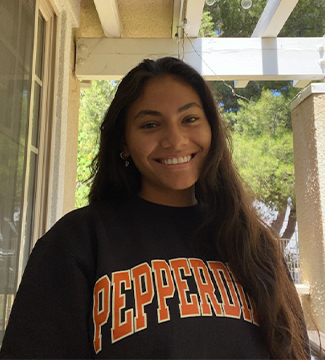 While this initially upset me, I used the only resource available to me during the
world’s lockdown: the internet. It was in this space that I evaluated what I personally
wanted to gain from my college education. I sat down, turned down the volume of the
world, and researched for myself what each school had to offer. I gauged what I needed
to thrive, and whether each school provided the systems and support to help me do
so. Here are the strongest factors for me that ultimately helped me decide to attend
Pepperdine.
While this initially upset me, I used the only resource available to me during the
world’s lockdown: the internet. It was in this space that I evaluated what I personally
wanted to gain from my college education. I sat down, turned down the volume of the
world, and researched for myself what each school had to offer. I gauged what I needed
to thrive, and whether each school provided the systems and support to help me do
so. Here are the strongest factors for me that ultimately helped me decide to attend
Pepperdine.
*I want to note that there are, of course, additional factors that you are assessing,
like financial feasibility. While I won’t be discussing that topic in this particular
blog, I encourage you to discuss that with your family and your admission counselor
directly to help you make an informed enrollment decision.
An education built on connection
As I mentioned earlier, I grew up not too far from Malibu, so it was well known to me that Pepperdine was an institution dedicated to academic excellence. But beyond its rankings within the Top 100 Best National Universities, what drew me in was how much it emphasized a tailored education. Having attended small schools for my entire life, I knew there was a special element to learning in small classroom environments. In spaces like these, I had the experience of teachers knowing my name, caring about my interests, and deeply committing themselves to seeing me grow in any given subject. They didn’t just teach me how to plot coordinates on a graph or how to write a proper persuasive essay, but they taught me how to care for myself, show up for my community, and make the most of my education.
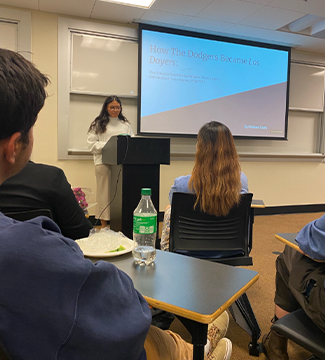 While small classrooms and knowing everyone’s name in school were my reality for grades
kindergarten through twelfth, I assumed that the next step had to be in a setting
that far outgrew my previous ones.
While small classrooms and knowing everyone’s name in school were my reality for grades
kindergarten through twelfth, I assumed that the next step had to be in a setting
that far outgrew my previous ones.
While Pepperdine was indeed larger than my previous schools, I was surprised to see that it was still so intentional about maintaining the small classroom environment. With its 13:1 student-to-faculty ratio and average class size of 19 students, it was clear to me that Pepperdine valued personal interactions with professors, thought-provoking discussions with peers, and an environment that values community engagement alongside individual growth. I realized during this period of self-reflection that smaller classrooms and tight-knit communities were a common thread in my lived experience that I wanted to maintain throughout college. On the other side of my college
experience, I can tell you how Pepperdine gave me this tailored education and more. I had class sizes as small as 4 students, professors who invited our entire class to their homes and cooked us breakfast (thank you, Dr. Carlsen, for the delicious bacon), and to this day, I meet with professors over lunch (shoutout Dr. Simonowitz!). But maybe we can dive into the aftermath of this long-lasting professor-student relationship in a future blog!
After looking back on my experiences with small classrooms, I realized that a small learning community was a priority for me. Consider for yourself, what is my priority when it comes to the classroom size and environment?
Faith-Based
Okay, so picture this: when I was in middle school, I began my personal journey of
faith by following Jesus. By the time my senior year of high school rolled around,
I began to seriously consider a faith-based institution. This period also coincided
with my intentional focus on becoming a stronger, more dedicated student. My faith
was deepening through attending local church youth groups and Bible studies, and simultaneously,
I was realizing how much I valued my education. My intellectual growth and my faith
walk were equally important, and I was determined not to sacrifice one for the other.
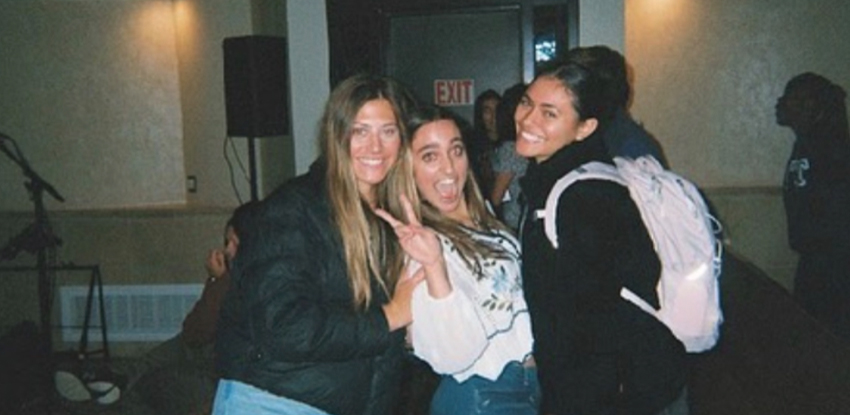
Pictures of my friends and me at the Well, a weekly worship event on campus!
What truly impressed me about Pepperdine was its dedication to academic rigor and students' intellectual growth, while also being equally invested in helping students find or maintain spiritual grounding. During my research, I learned that all students at Pepperdine are required to take 3 religion courses as part of our Seaver Core (General Education) curriculum. These classes study the Christian faith using the Torah and New Testament, and assess how the Christian church has interacted with culture over the past 2,000 years. I was definitely familiar with well-known stories of the Bible, but I was excited to approach my beliefs from an academic lens and develop my understanding of the historical context surrounding the faith that was personal to me.
Years later, I recall one of my fondest memories with my religion professor. I met with him on the Light House patio to discuss my questions about the classroom material. Turns out, our 30-minute appointment turned into a 3-hour conversation about my personal questions and wrestlings with faith! My professor was willing to walk with me through my thoughts and even connect that to what we were learning in that Religion 200 course. I couldn’t have exactly predicted that from my research in 2020, but I knew I valued having the space to explore my faith and academics with the same resolve and care. After 4 years of studying my faith and growing it in community all throughout campus, I can confidently say that Pepperdine provides that.
I love this quote by George Pepperdine: “There are many good colleges and universities which can give you standard academic training, but if our school does not give you more than that, it really has no reason to exist.” He went on to say, “ The great difference between this college and other colleges is that we are endeavoring to place adequate emphasis and greater stress upon religious teaching and Christian character. I want to present to you, in teaching and example, the Christian way of life. We do not compel you to accept it. You are free to make your own choice, but we want you to know what it is.”
You do not have to be a Christian to attend Pepperdine, and it is important to know that we welcome students from all faith backgrounds. This is because we want students to dialogue about the important topic of faith and share their perspectives in community with one another. In assessing what you want out of your college experience, perhaps you can see if opportunities to explore your faith are priorities for you, too.
Smaller, but still important factors
The chance to explore faith during college and learning in small classroom sizes were pretty much at the top of my list. But here are some final factors that I was considering too: proximity to my family and weather. Some people might say from the get-go that these factors are menial and they have no real impact. But I want to suggest that if you are going to choose where you will spend the next 4 years of your life, you have the green light to consider weather forecasts and location!!!
Coming from the warm (scorching, actually) San Fernando Valley in Southern California, I knew I liked the heat! I didn’t enjoy being in cooler temperatures, so naturally, I knew from the beginning that I wanted to attend a university in the SoCal region, where the Mediterranean climate would keep me warm year-round.
Additionally, being close to my family was something that I wanted to maintain throughout
college. It wasn’t my desire to attend an out-of-state university or have to travel
long distances to see my family over the breaks. I kept this in my back pocket along
with all of my other priorities for my enrollment decision. And it was in the moment
where I assessed what was most important to me that I was able to make a firm decision
on the school that would be the best fit for me.

At graduation with one of the closest friends that I made throughout Pepperdine. Still
friends today!
As you go through that process now, I want to encourage you that your priorities matter in this important decision. Don’t know what those factors are for you? Maybe you can do what I did. Sit down with yourself. Evaluate what is important to you, in life, in communities, in your education. Making your decision on which college or university to attend isn’t about flipping a coin. It’s about seeing which school will be the best fit for you. After sitting down that evening, assessing my priorities, and researching each school, I got more clarity. I knew deep down that Pepperdine was the choice for me. It lined up with what I both wanted and needed to succeed in a college environment. And I am confident that you will be able to make the best enrollment decision for yourself, too!